Positions in American Football: Who Handles What on the Field
Seven offensive players must line up on the line of scrimmage, with four behind it. That one rule shows how clearly the positions are defined, since every player gets a specific job. Watching a game for the first time, you might see only chaos. Can you make sense of it quickly? Yes, as long as you know the three units that make up a team. This article lays out the positions on offense, on defense and on special teams, and it covers the gear you need to get started.
How is a team divided?
A team has an offense, a defense and special teams. The three units take turns on the field, so players can concentrate on one set of tasks. Each unit has its own positions, duties and ways of lining up. That is why positions are easier to learn in groups than one at a time.
Jersey numbers help officials and viewers identify a player's position. They are a handy clue when you are trying to tell a lineman from a wide receiver. Once the three units make sense, it gets easier to see who is responsible for what.
Offensive positions: from the quarterback to the wide receivers
A typical offense has a quarterback, five linemen, a running back, a tight end and wide receivers. The quarterback runs the offense. The ball is oval and has laces, and the quarterback grips them to throw a spiral. That grip is one of the first things to look for when you watch a quarterback work.
The offensive line has a different job. Linemen block and protect the quarterback, and they usually do not carry the ball. They buy the quarterback time to pass and give the running back room to run. These positions draw less attention, but the entire offense depends on them.
The running back carries the ball, so the role is closely tied to the line's work. When the linemen block well, the running back has space to move. This split of duties shows that no offensive position works alone.
The tight end and the wide receivers round out the formation. Their job is to get open and catch passes. Remember the split from the start: seven players on the line of scrimmage and four behind it. That gives every offense a set shape, which makes the roles easier to spot.
Defense and special teams
The defense is made up of linemen, meaning defensive tackles and ends, along with linebackers, cornerbacks and safeties. The linemen stand nearest the offense, and the other groups set up deeper downfield. This layout lets the defense stop both the run and the pass. Every position has its own job, and together they make the defense work as one unit.
When you watch a game, look at the linemen first and then at the players lined up behind them. Reading the field in that order shows you how the defense reacts to the shape of the offense.
Special teams take the field for kickoffs, punts, field goals and returns. The kicker and the punter have specialist roles, so their practice centers mostly on kicking. Keep an eye on special teams, because they often decide where a team begins its next drive.
Football gear: what do you need?
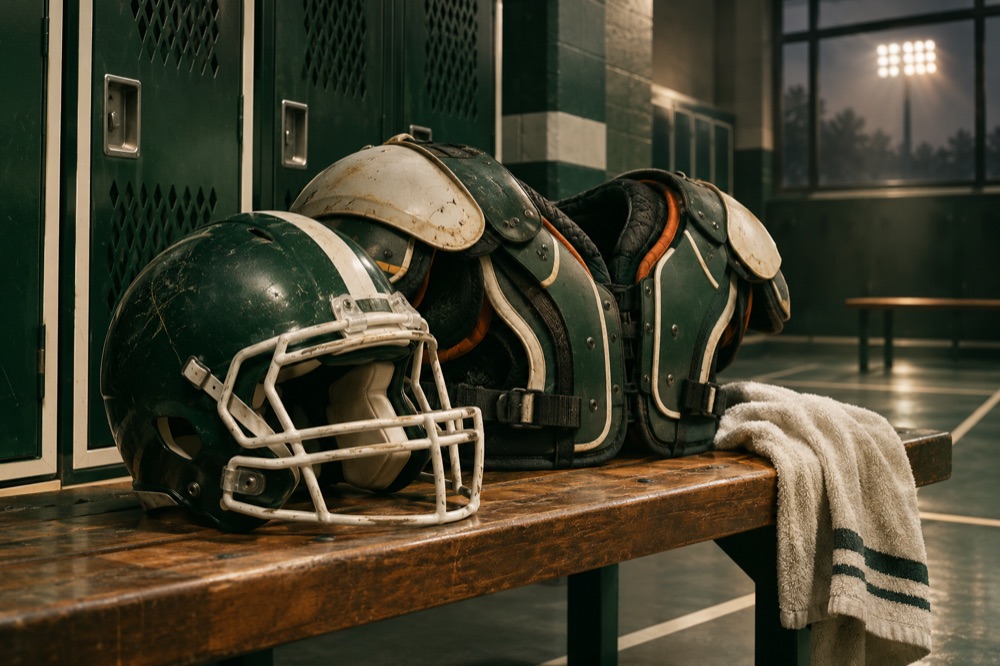
Football gear includes a helmet with a facemask, shoulder pads, hip and thigh pads and a mouthguard. The helmet and pads are essential, since contact is part of the game. That means each piece has to fit the player properly.
Check your helmet and pads before the season begins. Go through the whole set piece by piece, including items you have used for a long time. Every item has to fit.
Beginners often borrow gear from their club so they do not have to buy a full set at once. In this guide, we treat that gear as a starting point, because a well-fitted helmet and pads let you practice with confidence.
What should decide your position?
Your choice of position depends on the role you want on the team. If you like blocking and protecting the quarterback, consider the offensive line. If the passing game appeals to you, look at quarterback, tight end or wide receiver. If defense is more your speed, you can choose among linemen, linebackers, cornerbacks and safeties.
Kicking is the job of the kicker and the punter, so that is where their practice time goes. A special teams spot is a specialty, so you do not need to know every role on offense or defense. Each option is different, yet all football positions share one thing: a specific job for the player.
How can you start without contact?
If you are not sure American football is for you, you can begin with non-contact flag football. It is a good way to learn the rules and see how the positions work before you commit to full gear. Over time, it gets easier to choose the role that suits your abilities.
Knowing the positions and basic gear is the first step toward following the game and joining practices. Read our other guides to learn more about getting started in the sport.