How to Start Playing American Football: A Beginner's Guide
How do you get into American football when the sport feels foreign and complicated? Flag football is set to join the Los Angeles Olympic Games in 2028, which makes this a fine moment to get curious about the game. This guide walks through several ways in, from the no-contact version to regular practices with a club. It also covers your first session, what to wear and how to stay safe. Because arrangements differ from club to club, always confirm the details with the club itself.
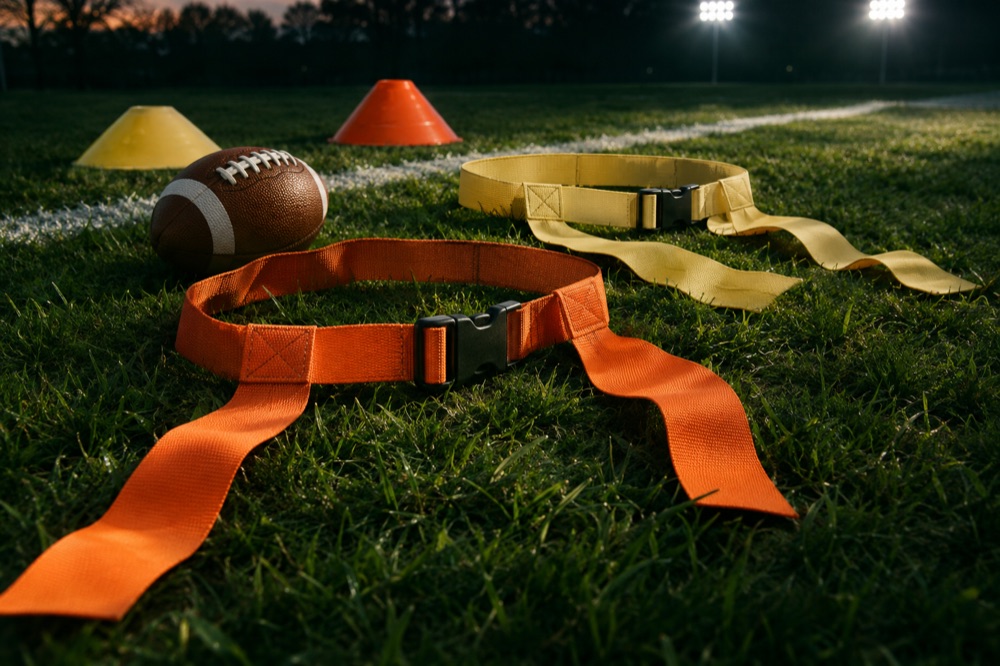
What is flag football, and why is it a good first step?
Flag football is played without tackling or blocking. Rather than bringing an opponent to the ground, a player pulls a flag off the opponent's belt. For a newcomer, that makes for a gentler way to learn the rules, since you can concentrate on passing, positioning and strategy instead of contact. Starting here lets you get comfortable with the field and the terminology before you decide whether the full-contact game is for you.
Flag football is also gaining visibility. Besides its Olympic future, the GB Lions field national flag football teams. For many people that shows flag football is a sport in its own right, with its own paths for moving up, and not just a side project of the traditional game. If you are unsure about taking hits, it is a sensible place to begin.
How do you start playing American football at a club or college?
The easiest way in is to go to an open practice. Plenty of UK clubs run these sessions for new players, but you should confirm dates and requirements with the club directly. A quick email or phone call ahead of time can tell you whether there is a beginners' group and whether you can show up without registering. That saves you from surprises on the day.
Students have an extra option. Colleges have their own teams in the BUAFL, which gives students a natural way into the sport. On the adult side, most players at BAFA clubs are amateurs, so you do not need to have played as a kid to earn a spot on a roster. Beginners should not feel out of place at these clubs.
Your first session: what to bring and what to expect
For a first session, comfortable athletic clothes, water and cleats or running shoes will do. Clubs often lend out helmets and pads, so there is no need to buy a full set right away. Before you spend any money, ask the coach what you will need over the next few weeks. A first session is also a good time to ask questions and see how the team operates.
Do not worry about your body type, either. Different positions ask for very different strengths, including speed, power, agility and accuracy. That leaves room on the field for smaller, quicker players as well as those who rely on strength. Nobody has to know which position they will play before their first session.
Why is it worth taking up American football?
For one thing, the sport offers many different positions. Each one rewards different qualities, so every player can find a role that fits, whether that means speed, strength, agility or accuracy. American football is a team sport, and everyone on the field has a part to play.
For another, students have a clear route. College teams in the BUAFL let you start playing in a setting that is already part of campus life. And because most players at adult BAFA clubs are amateurs, beginners step into an environment where passion counts for more than a professional contract.
Finally, flag football gives people who would rather skip contact a way in. Its Olympic outlook for 2028 and the GB Lions national teams suggest this version has a bright future. Together, these routes open American football to far more people than a select few.
Safety in American football: what to keep in mind
American football is a contact sport, so begin by getting a doctor's okay and talking honestly with the coach about your health. Mention past injuries and medical conditions, even ones that seem minor. The coach can then pick suitable drills to start with and watch how your body handles the physical demands. We urge you to have this conversation before your first contact session.
A warm-up, mobility work for the shoulders and neck, and practice at falling safely all lower the risk of injury. Treat them as core parts of training and not as extras before the real game. A warm-up readies the body for exercise, shoulder and neck mobility targets the areas under the most strain in a contact sport, and falling technique teaches you how to land more safely. Safe habits grow step by step from the first session, and flag football lets you practice many parts of the game without tackling or blocking.
Where should you begin today?
Start by choosing the version that suits you: non-contact flag football, or the traditional game at a club or college. Then get in touch with the team you picked, arrange to attend an open session and schedule a doctor's visit. Ask a club near you about a beginners' group. That gives you a clear first step toward playing American football.